
B12 · Medical & Healthcare
Stainless Steel Sheet for Medical & Hygienic Applications: 304/316L Selection and 5-Part List
In medical and hygienic applications, we have organized five parts that use stainless steel: commonly used 304 / 316L / 420, thicknesses from 0.8–8 mm.
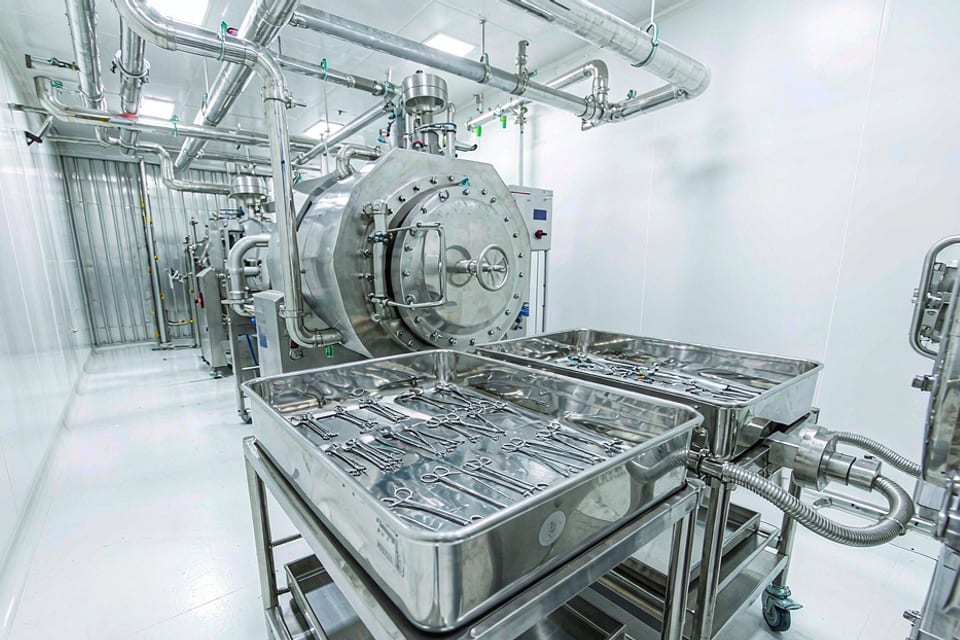
5 Parts and Material List
| Part / Component | Recommended Grade | Size / Thickness | Surface | Failure Mode | Reference Standard |
|---|---|---|---|---|---|
| Bone Knife/Bone Scraper | 420Mod/40Cr13 | 3–1 mm blade thickness | Matte/Shot-Peened | 420Mod 50–58HRC; 40Cr13 470–660HV | Blunt edge + cracking + boiling water corrosion |
| Scissors | 20Cr13/420 | 2–1 mm blade thickness | Matte or Bright | 20Cr13 40–48HRC; 420 48–56HRC | Axle hardness + corrosion |
| Drill/Bone Drill | 420b/440C | φ2–8 mm | Polished/Lacquered | 420b 48–56HRC; 440C 58–62HRC | Wear + thermal cracking + corrosion |
| Forceps/Suture Forceps/Grippers | 12Cr13/20Cr13/05Cr17Ni4Cu4Nb/304/316L | 1–3 mm | Matte or Neutralized | 38–45HRC; two-piece hardness difference ≤ 4HRC | Elastic failure + hinge wear + corrosion |
| Shelves/Trays/Surgical Carts/Bed Frames | 304/316L | 8–3.0 mm | 2B/Polished/Electropolished | Not quench-hardened | Repeated steam sterilization at 134°C + cleaning agents + pitting |
The table belowStandard configuration.Depending on operating conditions, various parts can be switched from 304 to 316L or 2205 — understanding the conditions is easier than specifying a grade.
Material Selection Tips
- The most common grades in this industry are 304 (2), 316L (2), and 420 (1) — the numbers in parentheses indicate the number of parts involved, which is useful for quotations and material ordering.
- Thickness range 0.8–8 mm: thin sheets are mainly formed parts (considering back bending and deep drawing cracking), thick plates are mainly welded structures (considering heat input and sensitization).
Frequently Asked Questions
Which stainless steel is most commonly used for medical and hygienic applications?
Total pages: 5, most commonly 304 (2), 316L (2), 420 (1). For any specific part it still depends on the medium and temperature; for example, a stainless countertop should be switched from 304 to 316L when exposed to salt water.
Which part is most likely to fail?
Failure details, typically "Bone Knife/Hatchet": 420Mod 50–58HRC; 40Cr13 470–660HV; recommended grade: 420Mod/40Cr13, blade width 1–3 mm. For this type of application, it is recommended to specify the medium concentration, temperature, and cleaning method at the design stage.
Which thickness should I choose?
The thickness range in the list is 0.8–8 mm.
For thin sheets, focus on formability and surface; for thick plates, focus on strength; for the same part, values may vary by equipment manufacturer — review your drawings or conditions.
Applications5
Thickness0.8–8mm